In a city of hills, water, and low clouds, vertical ambition needed a symbol. The Space Needle supplied one—thin, strange, and immediately legible from almost every compass point.
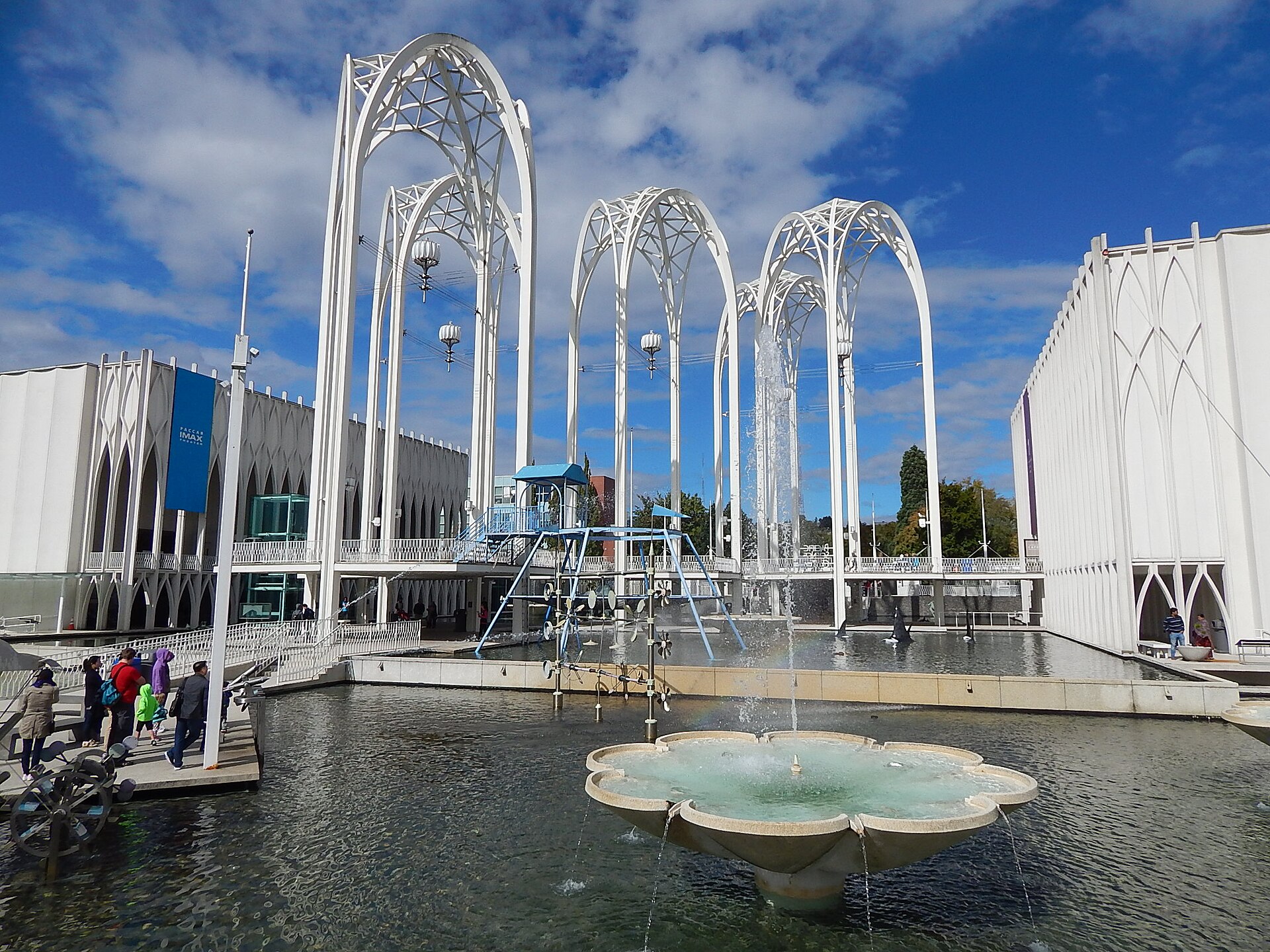
When Edward E. Carlson sketched a tower on a napkin in the late 1950s, Seattle was still arguing with itself about what the twentieth century should look like on the Pacific edge. The Century 21 Exposition would become the argument’s stage. The Needle would become its punctuation mark.
A tower built to expire—and then refuse
The Space Needle was conceived as fair architecture: temporary enough in spirit to sell a vision of the future, permanent enough in structure to survive Seattle weather and civic afterthought. John Graham Jr.’s office translated the sketch into a tripod of painted steel, a revolving restaurant level, and an observation deck that turned altitude into a public narrative.
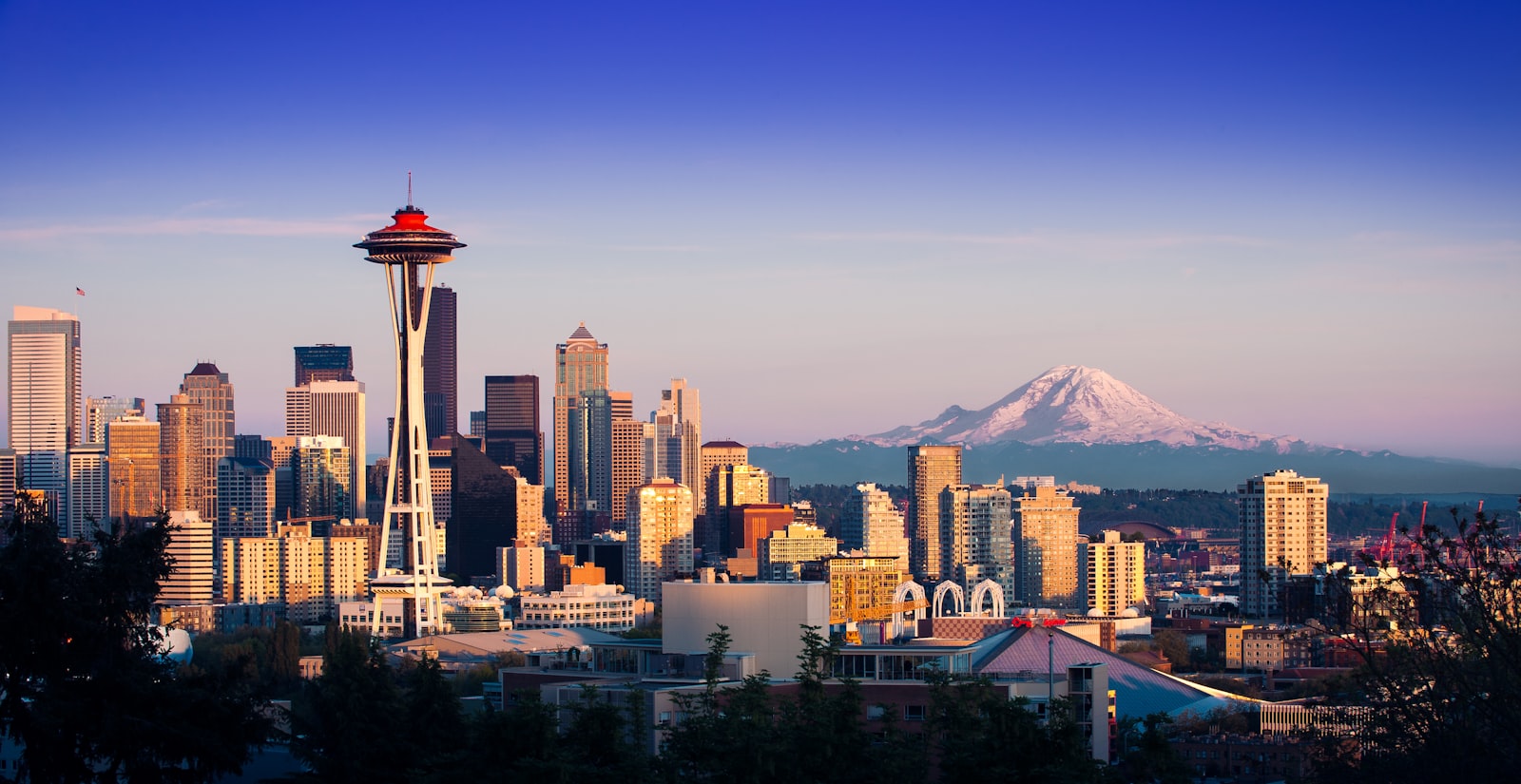
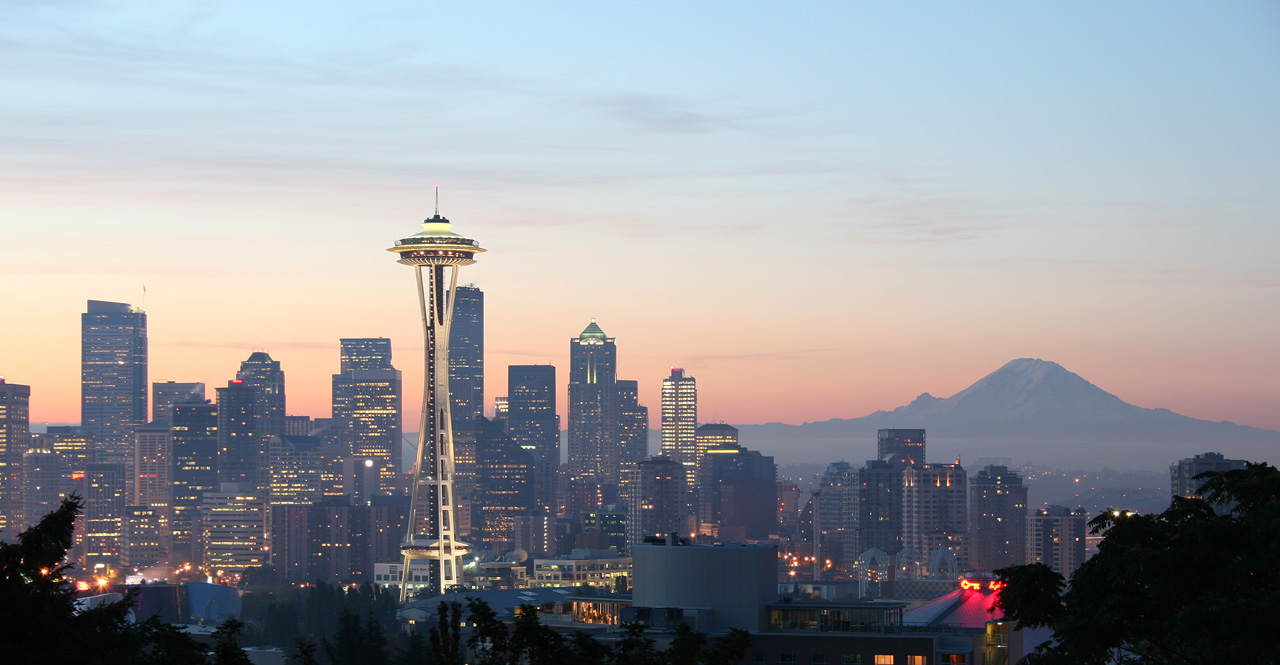
At roughly 605 feet, the Needle was never the world’s tallest anything for long. That was never the point. Its power was silhouette. Three legs meet a flared saucer; the saucer meets a spire; the spire meets weather. From Queen Anne or from a ferry on Elliott Bay, the form reads in a single glance—the rare skyline object that behaves like a logo without becoming a billboard.
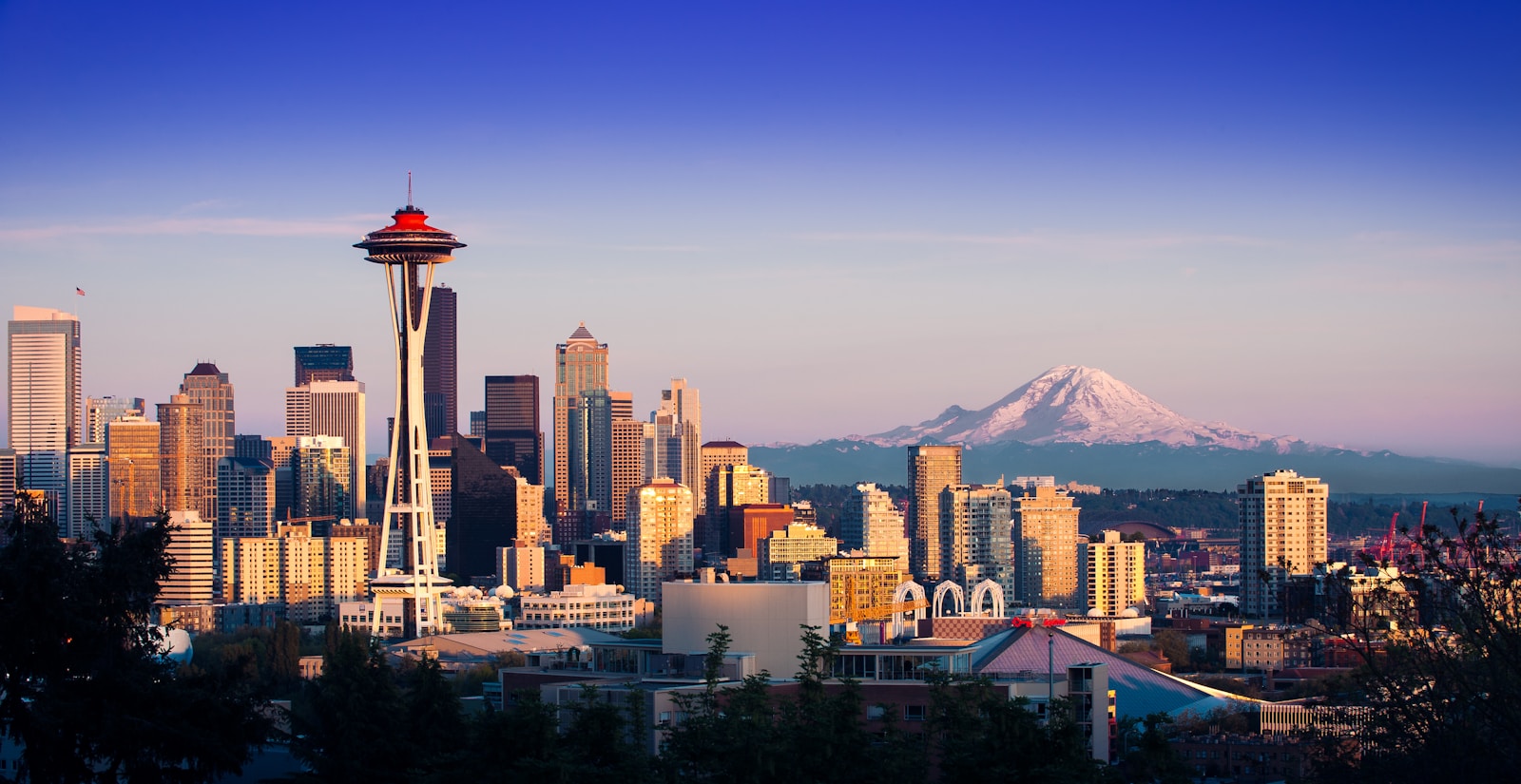
Engineering optimism, painted in public
Construction compressed an improbable civic timetable. Foundations were poured; steel climbed; elevators stitched the shaft to the saucer. The color story—shifting through “Astronaut White,” galactic golds, and later reinterpretations—kept the structure in conversation with fashion and civic mood. What never changed was the Needle’s role as a hinge between fairground fantasy and everyday orientation.
Inside, the experience is choreography: ascent, horizon, rotation, descent. Outside, the experience is recognition. Children draw it. Photographers chase weather around it. Architects argue about whether it is mid-century kitsch or mid-century courage. Both arguments keep it alive.
Why the essay still matters
Seattle’s later towers—glass, taller, denser—did not erase the Needle. They made it more necessary. In a forest of rectangles, an eccentric tripod still announces that the city once chose wonder as policy. Reading the Space Needle today is less about nostalgia than about continuity: how a six-month fair left a permanent instrument for seeing the region.
1962 Journal returns to the structure as culture—steel, story, and skyline grammar—because Seattle’s vertical imagination still begins with that impossible saucer on three legs.